You'll want Parkhill arborists who understand Sarnia's unique climate conditions, soil composition, and utility requirements. We follow ISA A300/ANSI Z133, professional traffic safety protocols, and utilize precision testing equipment (resistograph, moisture, thermal) to assess, prune, or safely remove with certified equipment and safety gear. Rely on detailed treatment plans, exclusion zones, and equipment positioning that safeguards property and people. Available around the clock for emergencies with GPS-tracked crews, we maintain records of visual documentation, risk evaluations, and treatment programs. Keep going to see exactly how we protect your property.
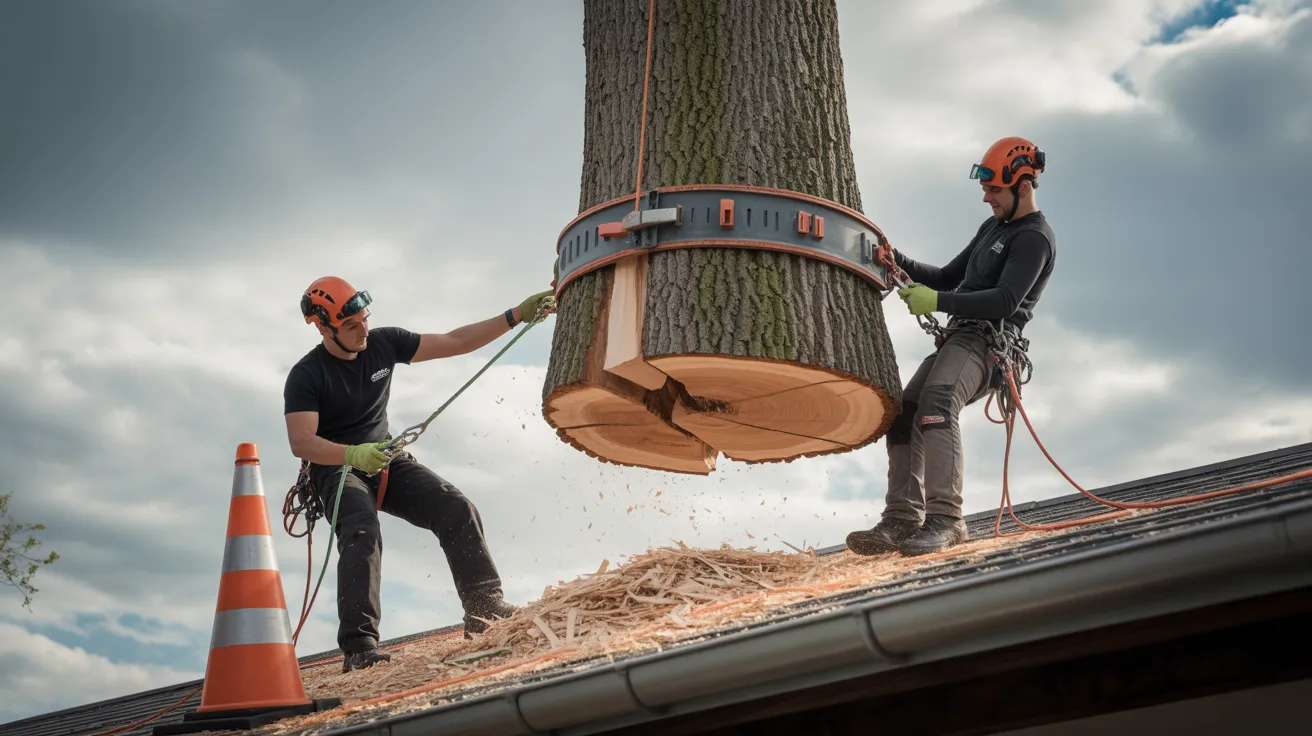
Essential Points
- Local Sarnia specialists handling lake-effect winds and clay soils, addressing utility setbacks and drainage constraints for safe and compliant tree maintenance.
- ISA-aligned inspections featuring resistograph testing, soil testing, and risk assessment matrices to identify and diagnose concerns and develop precise care plans.
- Expert tree pruning and crown maintenance that protects natural form, limits live foliage removal to 20-25%, and strengthens structural stability.
- 24-hour emergency assistance with GPS-equipped specialists, featuring specialized gear, secure tree elimination, complete stump grinding, and comprehensive area restoration.
- We operate with full insurance coverage and adhere to industry safety standards, employing certified equipment, detailed safety procedures, and clear reports for homeowners and their insurance companies.
Why Local Arborists Matter for Sarnia Properties
Because trees respond to local environmental factors, local arborists bring the regional knowledge Sarnia homes require for reliable, research-backed service. You work with experts who know about shoreline weather impacts, clay‑rich soils, drainage constraints, and infrastructure clearances typical in your neighborhood. They calibrate maintenance timing, securing techniques, and chipper placement to minimize risk to buildings, passersby, and utilities.
Regional knowledge strengthens compliance. Qualified tree experts coordinate their advice with local regulations, utility clearance requirements, and environmental protection schedules. Through community engagement, they distribute hazard reporting protocols and organize area-specific preventive actions after storms. Their weather-based knowledge help you predict freeze-related problems, insect-related damages, and drought stress, so you can plan interventions before problems escalate. You obtain focused, defensible recommendations that safeguard canopy longevity and property protection.
Complete Tree Health Evaluations and Services
We initiate our approach with a systematic tree health evaluation that integrates site data, diagnostic tools, and visual inspection. We maintain records of tree species, age classification, environmental exposure, and soil characteristics, then execute root collar evaluations to detect root girdling, deterioration, and elevation variations. Utilizing moisture measurements, resistograph data, and chlorophyll fluorescence testing, we assess structural integrity and physiological condition.
You receive seasonal diagnostics customized for Sarnia's climate: spring growth and tissue evaluations, summer foliar analysis, fall root system health checks, and winter tree health evaluations. We test soil for pH levels, electrical conductivity, compression, and pathogen presence, and document defects based on ISA best management practices. Our maintenance plans detail appropriate root zone aeration, mulching depth, watering schedules, preventive care measures, and trunk protection strategies to reduce hazard potential and improve long-term survival.
Advanced Pruning and Canopy Maintenance
Optimize strength and protection with pruning techniques that focus on biological principles and load distribution, rather than mere aesthetics. You'll decrease potential hazards by performing cuts at the branch connection, maintaining defense systems and sap movement. Begin with a detailed tree inspection: detect co-dominant stems, stretched laterals, and uneven weight distribution. Implement weight balancing strategies to even out weight, minimizing twisting forces during wind events. Perform strategic thinning-never lion's-tailing-to protect inner canopy, improve ventilation, and lower drag forces without triggering excessive growth.
Establish quantifiable boundaries: prune no more than 20-25% of live foliage per season, preserve at least 33% branch diameter at attachment points, and maintain clearance specifications around infrastructure and utilities. Prioritize deceased branches, crossing limbs, and unhealthy tissue. Record development response and plan revisits on a 36-60 month cycle to preserve proper structure, sunlight exposure, and storm hardiness.
Safe and Efficient Tree Extraction Solutions
When structural issues, disease, or clearance problems can't be fixed through pruning, complete removal is the best solution. Our methodical process benefits you, including location assessment, technical rigging preparation, and precise cutting methods to protect surrounding property. Qualified team members carefully dismantle trees piece by piece, employing industry-standard gear, mechanical brake systems, and guide lines to control falling sections. We conduct thorough utility checks, establish safety zones, and comply with ANSI Z133 and ISA BMPs to reduce potential hazards.
Extracting stumps and roots concludes the procedure, preventing interference and unwanted sprouting with underground infrastructure. We utilize stump grinders configured to reach tight sites, and we restore using suitable fill to maintain grade. Materials are recycled when practical, and we leave the site tidy and suitable for future landscaping.
Emergency Storm Response and Risk Management
When major storms hit Sarnia, you need rapid storm response that sends out certified crews, specialized tools, and road safety measures within hours to secure storm scenes. You should expect hazard assessment protocols that comply with ISA and ANSI A300 standards: thorough root and crown assessments, load path analysis, and utility conflict checks. With these systematic approaches, we minimize residual risk, prioritize critical removals, and restore access safely.
Quick Storm Response
Following extreme weather conditions, Parkhill Tree Service springs into action to secure damaged sites, eliminate safety threats, and reestablish entry points across Sarnia. You get immediate assistance managed via a 24/7 dispatch, GPS-tracked fleet, and ready-to-deploy equipment. Professional staff deploy with specialized tools including insulated saws, rigging gear, traffic control kits, and chipper/loader units to open essential corridors and protect utilities.
You gain advantages from community coordination with public works, utilities, and emergency services to manage compromised trees, blocked roads, and downed power lines impacting buildings. Teams implement ICS-style roles, create safety perimeters, and adhere to ANSI Z133 and provincial standards. They conduct systematic dismantling, crane picks for substantial tree falls, and waste segregation for efficient disposal. Documentation encompasses dated visual evidence, material handling records, and work logs to facilitate insurance claims and municipal reporting.
Risk Evaluation Guidelines
Although crews mobilize quickly, they won't proceed until a structured hazard assessment verifies the area is secure and goals are clear. You'll witness a methodical sweep: set up exclusion zones, check utility status, and stabilize traffic interfaces. Teams perform risk mapping to identify stressed limbs, compromised stems, root-plate failures, and possible strike hazards.
They use precision rangefinders, clinometers, and thermal imagers to identify energized conductors and hidden stress. Stress patterns are evaluated to predict hazard trajectories. Risk categorization systematically identifies elements by hazard category, aligning elimination procedures to hazard severity: specialized rigging, machine-assisted removal, or precise felling. You'll be provided thorough analysis, containing photos, hazard assessments, and safety recommendations. This methodology minimizes safety hazards, stops chain reactions, and reestablishes access with documented safety parameters.
Expert Stump Grinding & Restoration
Restoring your landscape begins with meticulous stump grinding that removes trip hazards, halts regrowth, and conditions the site for new use. We adjust grinder depth to 6-12 inches below grade, matching tree species characteristics and site loads. You benefit from proper waste containment, secured work spaces, and confirmed utility mapping prior to removal.
After grinding is complete, we perform targeted root removal to prevent lateral sucker formation and mitigate surface heave risks. We isolate chips from mineral soil to prevent nitrogen drawdown, then backfill with a sorted aggregate-soil blend that enables compaction and soil stabilization. The final grade ensures positive drainage and uniform subgrade tolerances. If you intend to install hardscapes or replanting, we furnish detailed soil analysis and structural capacity guidance so the restored footprint performs safely and predictably over time.
Strategies for Disease, Pest, and Soil Management
Because tree health relies on prompt identification and controlled treatments, we incorporate diagnostics, thresholds, and corrective measures into a complete treatment approach. We initiate with detailed examinations, using fungal diagnostics, pheromone monitoring, and canopy analysis to identify pathogens and pest populations. You receive specific action points that indicate when intervention is needed, avoiding unwarranted treatments.
Our first step is to correct soil limitations. We analyze essential soil metrics like pH, EC, CEC, and organic matter, then implement specific amendments and tested soil inoculants to improve root symbiosis and nutrient availability. For pest and disease management, we implement targeted trimming, sanitation, and approved chemistries under IPM guidelines. We coordinate applications based on life cycles, protect beneficial organisms, and document outcomes. You obtain comprehensive progress updates, follow-up assessment timelines, and updates based on observable plant responses and environmental factors.
Insurance Coverage, Equipment, and Safety Standards
Confirm the team uses professional-grade arborist equipment including safety ropes, rope protection, precision saws, and certified rigging equipment. Obtain documented safety procedures conforming to ANSI Z133 and CSA/OHS requirements, addressing PPE, aerial rescue preparation and comprehensive job hazard evaluations. Verify comprehensive liability and WSIB/worker's compensation coverage, and request certificates naming you as an additional insured before operations commence.
High-End Arborist Supplies
Rely on Parkhill Tree Service to employ professional-grade arborist equipment calibrated for precision and safety. You get access to high reach aerial lifts with safety-rated booms, non-marking outriggers, and capacity tracking to eliminate overcapacity events. Staff utilize GPS guided fleet tracking to arrange equipment strategically and decrease idle time on-site. Chain saws feature inertia-activated chain brakes and low-kickback bars, while lifting equipment features traceable ratings that align with calculated forces. Machinery is maintained to OEM specs; chipper performance is confirmed through blade spacing verification, anvil alignment, and mechanical performance checks. Stump grinders feature guarding and emergency stops certified per CSA standards. Parkhill maintains active liability and WSIB coverage, and logs pre-job inspections, maintenance intervals, and calibration reports to document compliance and safeguard your property.
Comprehensive Safety Measures
Regularly, Parkhill Tree Service maintains a detailed safety program that incorporates technical safeguards, certified equipment, and verified insurance coverage. You benefit from a developed safety culture that implements job hazard analyses, operational planning sessions, and duty designations. Crews employ protective equipment appropriate for specific work dangers, follow lockout tagout for powered equipment, and position worksite signage to manage public and traffic interfaces. Supervisors enforce incident reporting and close call monitoring to implement remedial steps and quantifiable safety improvements. You'll see properly adjusted equipment, compliant rigging, and safety compliance reviews logged before mobilization. Field teams adhere to safety guidelines, with ongoing education on fall protection, elevated emergency response, and electrical hazard awareness. Documentation is compliance-verified, date-recorded, and confirmed at each phase.
Full Liability Coverage
Although no two jobs share identical risks, Parkhill Tree Service supports each job with all-encompassing liability insurance that corresponds to the company's engineered protocols and certified equipment. You get protection that addresses real-world field hazards-encompassing rigging loads, aerial lift operations, chipper exposure, and traffic control interfaces. We establish explicit policy limits for property damage, bodily injury, and completed operations, corresponding to safety evaluations completed before project mobilization.
Our insurance complements CSA-compliant PPE, yearly equipment evaluations, and operator certifications, covering aspects that self-insurance cannot address. We provide certificates of insurance as required, outlining endorsements, additional insured status, and waiver of subrogation when required. Should an accident happen, our streamlined claims process records chain of custody, timestamps, and incident causation, accelerating resolution while maintaining your project deadlines and financial planning.
Upfront Pricing, Booking, and Maintenance Programs
Since transparent details eliminate uncertainty, Parkhill Tree Service delivers transparent, line-item quotes that specify project scope, methodology, required equipment, disposal plans, traffic management, and permitting needs before commencing operations. You receive clear cost breakdowns linked with measurable outputs-DBH, canopy spread, access constraints, and utility proximity-so you can compare options and understand cost drivers. We document ANSI get more info A300 practices, PPE, and exclusion zones in your service agreement.
We'll provide a scheduled service window, advance service alerts, and alternative solutions for weather-related issues or utility interruptions. Our team comes with calibrated gear and finished safety protocols. Once finished, you get a post-service report with photos and recommendations. To ensure tree vitality and minimize potential problems, we offer regular care programs with regular evaluations, systematic trimming, pest control checks, ground maintenance, and cost planning.
Questions & Answers
What Are Your Eco-Friendly Tree Disposal and Wood Recycling Options?
Yes, we offer eco-friendly disposal and wood recycling options. We carefully divide logs, branches, and chips for repurposing: milling lumber, producing mulch, or supplying biomass facilities. Where feasible, we position specific logs or brush collections for habitat creation, adhering to local regulations and invasive species requirements. We sanitize our tools to prevent pathogen spread and provide chain-of-custody documentation. You'll receive detailed disposal strategies, weight records, and safety protocols conforming to professional guidelines and safety standards.
Is It Possible to Keep the Wood Chips or Logs for My Own Use?
Definitely, you can keep wood chips and logs. The impact is significant as big as a mountain. Spread chips as yard mulch; they moderate soil temperature, inhibit weeds, and conserve moisture. Let chips break down 3-6 months to reduce nitrogen drawdown. For logs, follow safe firewood storage: split them for faster seasoning, elevate the stack, protect the upper portion, make certain 15-20% moisture (use a meter), and store wood 6-10 feet from structures to decrease pest and fire risk.
Can You Tell Me About Your Seasonal Discounts and Referral Programs?
Absolutely. You'll usually find seasonal promotions during slower times (late winter or mid-summer) for tree services and stump removal. Make sure to get written conditions, eligible services, and restricted periods to ensure safety-critical tasks aren't rushed. Many providers also offer rewards for referrals-typically a percentage off or set dollar amount-after the new customer finalizes and settles their service. Verify limits per household, combination with other discounts, and expiration dates. Document quotes and discounts on the final invoice.
Do You Handle Municipal Permits and Bylaw Compliance Documentation?
You receive comprehensive permit assistance and bylaw navigation from initial contact to final closeout. We take care of identifying necessary municipal requirements, handling paperwork, obtaining arborist reports, and processing required applications. We coordinate professional assessments, utility locates, and traffic management plans as required. You'll receive thorough risk assessments, site maps, and tree work justifications conforming to ISA and ANSI A300 standards. We manage authorization progress, keep compliance documentation, and plan operations strictly following permit approval to ensure complete safety and compliance.
What Type of Service Warranty or Guarantee Do You Provide?
You receive a comprehensive service guarantee and a defined workmanship warranty on all completed tasks. We specify warranty conditions in writing, including timeframes, limitations, and remedial steps. Should issues emerge from our workmanship within the warranty period, we return promptly, evaluate concerns, and remediate to standard at no cost. You receive post-service paperwork, pictures, and compliance records to confirm results. Report issues within stated timelines so we can assess, mitigate risk, and honor the warranty efficiently.
Concluding Remarks
You could take chances with DIY chainsaws and guesswork, or you could rely on Parkhill's certified arborists and let professional standards tackle the challenging tasks. You'll benefit from comprehensive risk assessments, industry-compliant pruning, calibrated stump grinding, and fully insured removals that protect your assets. When severe weather strikes, you're guaranteed quick response times, documented procedures, and certified soil remediation. To be direct, you're not just paying for tree work - you're guaranteeing safety, compliance, and consistent outcomes.